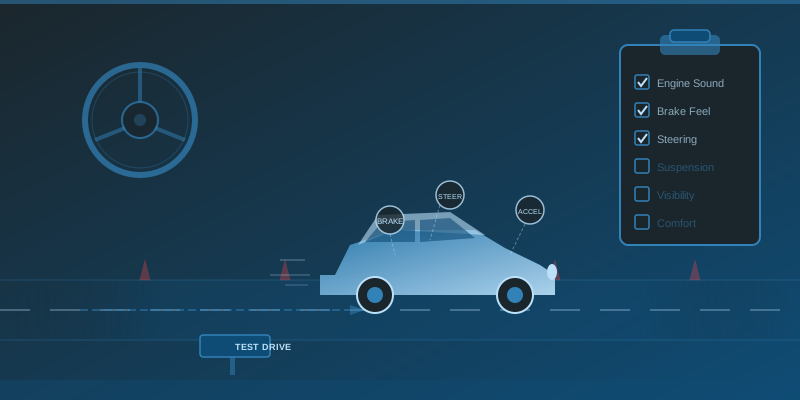
A test drive is not a joyride — it is your single best opportunity to evaluate whether a car fits your life. Yet most people spend more time test driving shoes at a store than they do testing a $30,000+ purchase. The average test drive lasts just 12 minutes and covers a route chosen by the salesperson. That is not enough. This guide will show you exactly what to check, what to listen for, and how to structure a test drive that actually tells you what you need to know.
Before You Arrive at the Dealership
Preparation makes the difference between a productive test drive and a wasted trip.
Do Your Research
Narrow your list to 2–3 models — trying to test 8 cars in one day leads to decision fatigue and poor comparisons
Know the trim level you want — features vary significantly between base and top trims
Read professional reviews — note any common complaints so you can specifically test for them
Check dimensions — if you need to fit car seats, strollers, or sports equipment, know the cargo measurements in advance. Our best cars for families guide covers family-friendly picks.
Schedule an Appointment
Call ahead and request a specific model and trim. This ensures:
The car is available, charged (if EV), and not being used by another customer
You get a dedicated salesperson who is not juggling walk-ins
You can request a longer test drive window (ask for 30–45 minutes)
Bring What You Need
Your driver's license (required)
Your phone with a navigation app — test the Bluetooth/CarPlay/Android Auto integration
Car seats — if you have children, bring the seats to check fit
A friend or family member — a second perspective catches things you miss, and they can evaluate the back seat
The Pre-Drive Inspection (5–10 Minutes)
Before turning the key, evaluate the car while it is parked.
Exterior Check
Walk around the car and assess the proportions and size — does it feel right for your garage, parking situation, and lifestyle?
Check visibility from the driver's seat: how large are the blind spots? How far can you see over the hood and out the back window?
Open and close all doors and the trunk/hatch — they should operate smoothly with solid feel
Interior Ergonomics
This is where many cars get eliminated. Check these carefully:
Seat comfort — adjust the seat to your ideal position. Is there enough lumbar support? Thigh support? Headroom?
Driving position — can you comfortably reach the pedals, steering wheel, and shift lever? Is the seat height adjustable?
Visibility from the driver's seat — check all mirrors, look over your shoulder, and assess blind spots
Infotainment system — pair your phone, try the navigation, adjust the audio. Is the screen responsive? Are the menus intuitive?
Climate controls — are they physical buttons or buried in touchscreen menus? Can you adjust them without looking?
Storage — check the center console, door pockets, glove box, and cup holders. Do they fit your phone, water bottle, and sunglasses?
Back seat — sit in the back seat yourself. Check legroom, headroom, and comfort. If you will have passengers regularly, this matters enormously.
Cargo space — open the trunk or hatch. Is it deep enough? Wide enough? Is the load floor flat?
The Drive: What to Test and How
Plan Your Own Route
Do not accept the dealer's 10-minute loop around the block. Request a route that includes:
City streets with traffic lights — test low-speed maneuverability, braking, and stop-and-go comfort
A highway on-ramp — evaluate acceleration and merging confidence. Does the engine have enough power?
Highway cruising at 60–70 mph — assess wind noise, road noise, and ride comfort at speed
A bumpy or rough road — test suspension. Does it absorb bumps or transmit every imperfection?
A steep hill (if available) — test power on inclines, especially if you are considering a smaller engine
A parking lot — practice parking. Check the turning radius and rearview camera quality
Your actual commute — if possible, drive the route you will take every day
What to Feel
Steering — does it feel responsive and natural? Too light? Too heavy? Does it track straight or pull to one side?
Braking — are the brakes smooth and progressive, or grabby and abrupt? How does the car feel during hard braking?
Acceleration — is there enough power for confident merging and passing? Does the transmission shift smoothly?
Ride quality — does the suspension absorb bumps comfortably, or do you feel jarred?
Seat comfort over time — after 20+ minutes, do you still feel comfortable? Any back pain or pressure points?
What to Listen For
Engine noise — is it intrusive at idle or during acceleration? Some drivers enjoy engine sound; others want silence
Wind noise — at highway speeds, is the cabin quiet or is there excessive wind buffeting around the mirrors or A-pillars?
Road noise — on rough pavement, how much tire noise enters the cabin?
Rattles and squeaks — any unusual sounds from the dashboard, doors, or rear? On a used car, these can indicate wear or poor build quality
Transmission sounds — listen for whining, clunking, or hesitation during shifts
What to Watch
Infotainment responsiveness — does the touchscreen lag? Do voice commands work accurately?
Driver assistance features — test adaptive cruise control, lane keeping assist, and blind-spot monitoring if available
Rearview camera and sensors — is the camera image sharp? Are parking sensors accurate?
Gauge cluster / head-up display — is critical information easy to read at a glance?
Used Car-Specific Checks
If you are test driving a used car, pay extra attention to:
Cold start — ask to start the car yourself when the engine is cold. Listen for unusual noises or rough idling
Exhaust smoke — blue smoke means oil burning; white smoke can indicate a head gasket issue
Transmission behavior — any slipping, jerking, or delayed engagement is a serious concern
Brake feel — pulsating brakes suggest warped rotors; pulling to one side indicates uneven brake wear
Warning lights — after starting, all dashboard warning lights should illuminate briefly then turn off. Any that stay on need investigation
Alignment — on a straight, flat road, the car should track straight without pulling. Briefly let go of the wheel (safely) to check
For a complete inspection checklist, see our what to check when buying a used car guide.
After the Test Drive
Take Notes Immediately
As soon as you get back, rate the car on:
Comfort (1–10)
Power (1–10)
Noise level (1–10)
Interior quality (1–10)
Technology ease of use (1–10)
Overall impression (1–10)
If you are comparing multiple cars, these notes will be invaluable later. Memory fades quickly, and cars start to blur together.
Do Not Buy on the Spot
It is almost never wise to buy after a single test drive. Instead:
Thank the salesperson and leave
Drive the other cars on your list
Sleep on it for at least 24 hours
Return for a second test drive of your top choice if needed
Questions to Ask the Salesperson
What is the out-the-door price?
Are there any current manufacturer incentives?
What is the warranty coverage?
For used cars: Can I see the vehicle history report? Can I take it to my mechanic for a pre-purchase inspection?
Ready to figure out which cars to test drive? Take our free quiz to get a shortlist of models matched to your needs, then use this checklist to evaluate each one.
FAQ
How long should a test drive be?
Aim for at least 30 minutes and 10–15 miles. This gives you time to cover city streets, highway, and rough roads while assessing comfort over a meaningful duration. If the dealer tries to limit you to 10 minutes, push back politely — you are considering a major purchase.
Can I test drive a car alone?
Most dealerships require a salesperson to accompany you, but some will let you drive alone, especially if you are a serious buyer. Having someone with you is actually helpful — they can check back seat comfort and provide a second opinion. Just make sure they do not distract you from evaluating the car.
How many cars should I test drive?
Test drive at least 2–3 competing models to have meaningful comparisons. Testing only one car gives you no baseline. Testing more than 5 in a single day leads to confusion. Spread multiple test drives across two days if needed.
Should I test drive in the rain or at night?
If possible, yes. Testing in rain lets you evaluate wipers, traction, and visibility. A nighttime drive tests headlight quality and dashboard glare. These conditions reveal things a sunny afternoon drive never will.
What if I do not like the car during the test drive?
End the drive early and politely. You are under no obligation to complete the salesperson's planned route or spend a minimum amount of time. Simply say the car is not what you are looking for and move on. Do not waste your time or theirs.
Should I test drive the exact car I plan to buy?
Ideally, yes. Different trims have different engines, suspensions, tires, and features that significantly affect the driving experience. A base model with a four-cylinder engine will feel nothing like a top trim with a V6. Test the specific configuration you intend to purchase.
Ready to Find Your Car?
Take our free quiz for personalized recommendations based on your needs.
Take the Car Quiz