
Best Time to Buy a Car: Month-by-Month Guide
Last updated: December 14, 2025
Timing your car purchase can save you thousands of dollars without any negotiating skill whatsoever. Dealerships operate on monthly, quarterly, and annual sales targets, and the auto industry follows predictable seasonal patterns that create windows of opportunity for buyers. This guide breaks down the best — and worst — times to buy a car so you can shop strategically.
The Best Months to Buy a Car
December: The Single Best Month
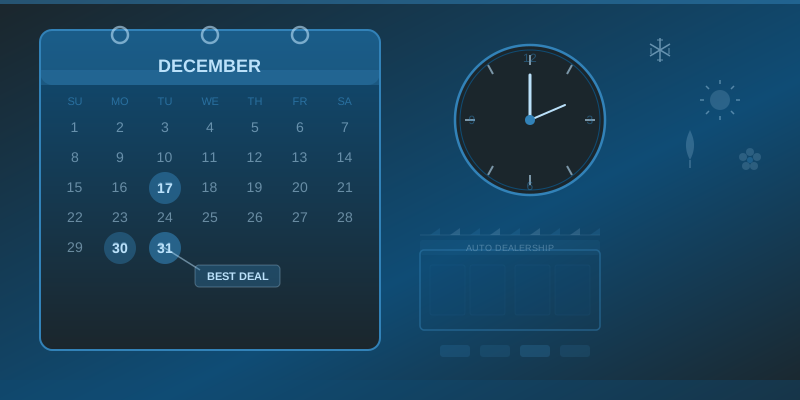
December is consistently the best month to buy a new car. Here is why:
Savings in December can be 6–10% below MSRP on popular models and even more on slow sellers. The last week of December, between Christmas and New Year's Eve, is historically the single best time to buy.
October and November: New Model Year Transition
When the next model year arrives on dealer lots (typically September through November), the outgoing model year needs to go. You can find:
January and February: Used Car Deals
While new car deals cool down after December, the used car market softens in January and February:
Memorial Day, Labor Day, and Fourth of July
Holiday weekends bring promotional events, special financing, and manufacturer incentives. These are not the absolute best times to buy, but the deals are reliably above average:
Black Friday
Black Friday has become a legitimate car-buying event. While the "deals" are sometimes more marketing than substance, genuine incentives do exist:
The Worst Times to Buy a Car
Spring (March–May)
Spring is peak car-buying season. Tax refunds hit bank accounts, the weather improves, and everyone starts shopping. High demand means:
Summer (June–August)
Convertibles, SUVs for road trips, and trucks for summer projects are in high demand. If you are buying a seasonal vehicle, summer is the worst time.
When a Model Is Brand New
The first model year of a redesign or brand-new vehicle commands full MSRP — sometimes even a markup. Wait 6–12 months for:
Month-by-Month Summary
| Month | Rating | Notes |
|---|---|---|
| January | Good (Used) | Used car prices dip; low demand |
| February | Good (Used) | Pre-tax-refund lull continues |
| March | Below Average | Tax refunds drive demand up |
| April | Below Average | Spring shopping picks up |
| May | Average+ | Memorial Day deals help |
| June | Below Average | Summer demand peaks |
| July | Average+ | Fourth of July promotions |
| August | Average | Late summer; some model transitions begin |
| September | Good (New) | New model arrivals; Labor Day deals |
| October | Great (New) | Outgoing model discounts ramp up |
| November | Great (New) | Black Friday; year-end push begins |
| December | Best (New) | Year-end quotas; maximum incentives |
Best Day of the Week to Buy
Beyond the month, the day of the week matters:
Shop early in the week if possible. A rainy Monday in December is about as ideal as it gets.
Best Time of Day
End of Month vs. End of Quarter
Salespeople and dealerships have layered quotas:
If you can time your purchase for the last few days of a quarter (especially Q4), you maximize your leverage.
How to Leverage Timing in Negotiations
Timing alone is not enough. Pair it with these tactics:
Does Timing Apply to Used Cars?
Yes, but the patterns are different:
For a used car, the condition and price matter more than the timing, but buying in a low-demand period can save you $500–$2,000 on the same vehicle. See our guide on what to check when buying used for a full inspection checklist.
How Much Can Good Timing Save You?
Realistic savings from strategic timing:
Combined, smart timing can easily save $5,000–$10,000 on a new car purchase.
Ready to find the perfect car? Take our free quiz to get personalized recommendations, then time your purchase using this guide to maximize your savings.
FAQ
What is the single best day to buy a car?
The last business day of December is widely considered the best single day to buy a new car. It combines end-of-month, end-of-quarter, and end-of-year sales pressure. Dealerships and salespeople are highly motivated to close every possible deal before the calendar resets.
Should I wait until the end of the month to buy?
It helps, but it is not a magic bullet. The last few days of any month give you more leverage because salespeople are trying to hit quotas. However, if you find a great deal mid-month, do not let it slip away waiting for the 30th. A good deal today is better than a slightly better deal that may not materialize.
Is Black Friday a good time to buy a car?
It can be, but approach with healthy skepticism. Some Black Friday deals are genuinely strong, with enhanced manufacturer incentives and dealer discounts. Others are mostly marketing. Compare the Black Friday offer against what you could get by negotiating normally. The real savings window is the last week of December, not November.
Are end-of-year deals real or just marketing hype?
They are real. Manufacturer incentives genuinely increase in Q4, especially December. Dealerships receive volume bonuses from manufacturers for hitting annual targets, and they will pass some of those savings to you to close deals. The data consistently shows December transaction prices are the lowest of the year for new cars.
Should I buy a car during a recession?
Economic downturns can create buying opportunities. Dealers sit on more inventory, manufacturers increase incentives, and interest rates may drop. However, only buy if your own financial situation is secure. A deal is not a deal if it strains your budget. Use our how much car can I afford guide to check your numbers first.
Does it matter what time of day I go to the dealership?
Somewhat. Visiting on a weekday afternoon, especially 1–2 hours before closing, can give you an edge. The showroom is less crowded, salespeople give you more attention, and there is a psychological pull to close the deal before the day ends. Avoid Saturday mornings, which are the busiest and least negotiation-friendly times.
Related Guides
Ready to Find Your Car?
Take our free quiz for personalized recommendations based on your needs.
Take the Car Quiz